

Donate

Donate Tree or Seeds or E-waste
Our Company Address
Green Future Foundation
123 Nature Avenue,
Eco City, Green State 123456,
India
Email: contact@greenfuture.org
Phone: +91 9876543210
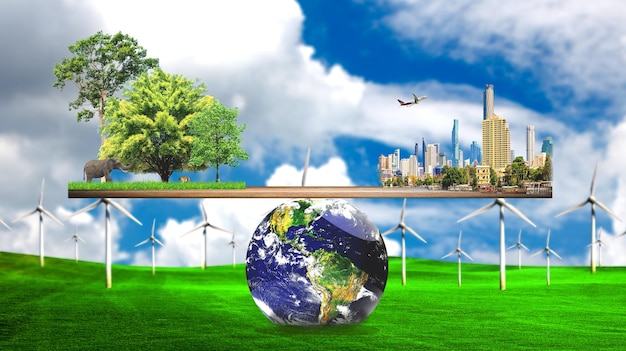
Clean Energy Momentum
India's clean energy transition is gaining impressive momentum—but it's not without major caveats. Here's a breakdown of what's happening:
---
🇮🇳 Clean Energy Momentum
✅ Major Achievements:
1. 50% of installed capacity now non-fossil
As of mid-2025, India has 242.8 GW of non-fossil power capacity (renewables, nuclear, large hydro) out of 484.8 GW total, 5 years ahead of its 2030 Paris Agreement commitment.
Breakdown:
Solar: ~85 GW
Wind: ~45 GW
Hydro: ~47 GW
Biomass and others: ~10 GW
Nuclear: ~7 GW
2. Rapid renewable project growth
India is adding over 15–20 GW of solar annually, with hybrid projects (solar + wind + storage) becoming more common.
States like Gujarat, Rajasthan, and Tamil Nadu lead in solar and wind installations.
3. Policy & Investment Push
The PLI scheme (Production Linked Incentive) for solar manufacturing and battery storage is driving domestic supply chains.
Foreign and domestic investors are backing green hydrogen, offshore wind, and grid modernization.
---
⚠️ The Caveats
1. ⚫ Coal still dominates actual electricity generation
Despite 50% of capacity being clean, over 70% of electricity generation still comes from coal due to:
Higher capacity factors of coal (runs longer, more consistent)
Solar and wind intermittency
Slow battery/storage rollout
2. 🏭 Air pollution rules diluted
On July 12, 2025, India eased sulphur emissions rules for coal power plants outside major cities, reversing a 2015 mandate to install flue-gas desulfurization (FGD).
This is a setback for air quality and public health, especially in rural and industrial regions.
3. 🕰️ Delays in major projects
Several large-scale solar parks and wind farms face delays due to:
Land acquisition issues
Transmission bottlenecks
Policy uncertainty at the state level
4. 🔋 Storage and grid reform lag behind
India’s ambitious clean energy goals depend on:
Battery storage scaling
Flexible grid infrastructure
Smart metering and demand response
These pieces are progressing slowly compared to capacity additions.
5. 💸 Subsidy phase-outs could impact adoption
Some rooftop solar subsidies and incentives are being phased out, especially in urban centers—potentially slowing household and commercial uptake.
---
📊 Visual Summary
Metric Status
Installed renewable capacity ✅ Surpassed 50% of total
Coal’s share in power generation ❌ Still over 70%
FGD mandate (air pollution controls) ❌ Loosened in 2025
Storage & grid readiness ⚠️ Lagging
Rooftop solar adoption ⚠️ Slowing in urban areas
---
🔮 Outlook
India is globally admired for its rapid renewable scale-up, but:
Without tackling coal dependence, grid bottlenecks, and emissions standards, the environmental and health benefits are capped.
2030 goals (500 GW non-fossil + net-zero by 2070) remain technically feasible but depend on stronger enforcement, energy access, and regional coordination.
Here’s a Clean Energy in India: FAQ (Frequently Asked Questions) — covering the momentum, challenges, and what's next:
---
🇮🇳 Clean Energy in India – FAQ
1. What percentage of India's power capacity is from clean energy?
As of July 2025, 50.1% of India’s installed power capacity (~242.8 GW out of 484.8 GW) comes from non-fossil sources:
Solar, Wind, Hydro, Nuclear, and Biomass.
---
2. If clean capacity is 50%, why is coal still dominant?
Because coal plants run longer (higher capacity factor) and supply baseload power, whereas:
Solar/wind are intermittent.
Storage solutions (batteries, pumped hydro) are still limited.
Result: Coal generates ~70% of actual electricity, even with lower installed capacity.
---
3. What are India’s clean energy targets?
2030: 500 GW non-fossil capacity.
Net-zero emissions: By 2070.
Hydrogen mission: India aims to become a major green hydrogen exporter by 2030.
---
4. Why did India roll back sulphur control rules for coal?
In July 2025, the government eased pollution control rules, citing:
Cost burden on power plants.
Delays in flue-gas desulphurization (FGD) tech rollout. Environmentalists argue this harms air quality and weakens the clean energy transition.
---
5. Which states are leading in clean energy?
Top performers:
Solar: Rajasthan, Gujarat, Karnataka.
Wind: Tamil Nadu, Gujarat, Maharashtra.
Hydro: Himachal Pradesh, Uttarakhand, Sikkim.
---
6. What challenges slow down renewable adoption?
Land acquisition issues
Transmission grid congestion
Slow storage deployment
Inconsistent state-level policies
Intermittent power generation
---
7. What is India doing to solve intermittency and storage gaps?
Key initiatives:
PLI schemes for domestic battery manufacturing.
Green Energy Corridors to improve grid flow.
Hybrid solar-wind projects with battery backup.
Pumped hydro and green hydrogen pilots.
---
8. Is rooftop solar catching on?
Growth in commercial & industrial sectors is strong.
Residential adoption is slowing, especially in urban areas, due to:
Policy uncertainty.
Net metering rollbacks.
Upfront costs.
---
9. Are electric vehicles (EVs) part of the clean energy mix?
Yes, EV adoption is increasing—driven by:
Subsidies (FAME II)
State EV policies
Charging infrastructure rollout
But EVs still depend on a coal-heavy grid, so emissions benefits are evolving.
---
10. Can India reach its 2030 targets?
Yes—but only if:
Storage & grid investments ramp up.
Fossil fuel subsidies are restructured.
Emissions standards are enforced.
Climate finance and international tech transfer continue.
Search
Categories
Tags
Latest Article