

Donate

Donate Tree or Seeds or E-waste
Our Company Address
Green Future Foundation
123 Nature Avenue,
Eco City, Green State 123456,
India
Email: contact@greenfuture.org
Phone: +91 9876543210
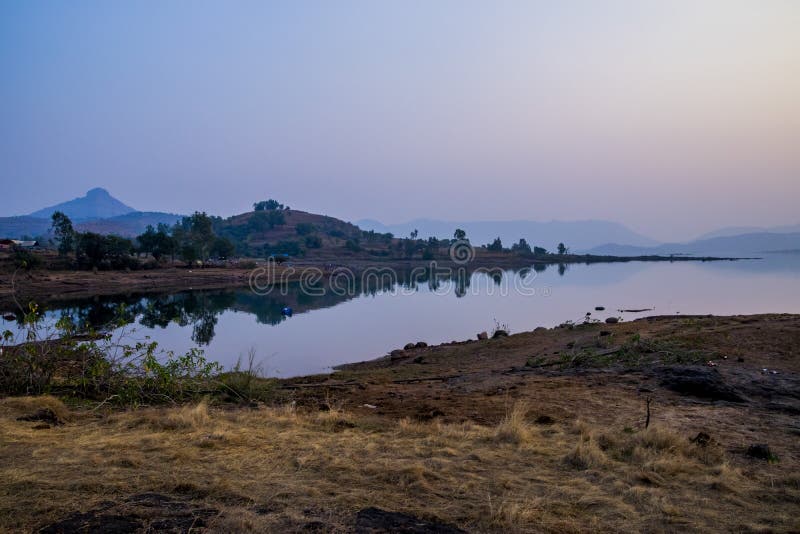
Pavana River Rejuvenation
Here’s the latest on the Pavana River rejuvenation project near Pune:
---
✅ SEIAA Grants Clearance for Rejuvenation Plan
What happened: On July 7, 2025, the State Environment Impact Assessment Authority (SEIAA) officially approved the environmental clearance for PCMC’s ₹1,440 crore (approx. ₹1,500 crore) Pavana River rejuvenation scheme .
Scope: The project spans 24.4 km within PCMC limits, aiming to address pollution control, flood mitigation, bank protection, erosion prevention, biodiversity enhancement, and ecosystem restoration—particularly supporting aquatic life and wildlife habitat .
---
🕰️ Timeline & Oversight by Environmental Authorities
Delays & Revisions: First submitted in Dec 2019, the Detailed Project Report (DPR) was revised multiple times following SEIAA and SEAC reviews, with hydrology and hydraulic inputs from CWPRS added in late 2024 .
NGT Involvement: In January 2025, the National Green Tribunal (NGT) flagged the absence of clear timelines in the original action plan (which expired in 2023) and instructed the River Rejuvenation Committee to outline a fresh schedule within three months .
---
🚧 Project Status & Next Steps
Tender Phase Next: With clearance confirmed, PCMC will commence tendering as soon as funding from central/state governments is secured .
STPs & Sewage Management: Under the action plan, several new sewage treatment plants (STPs) are planned—totalling hundreds of MLD—to be operational by December 2027, or earlier if resources permit .
---
⚠️ Public Concerns & Ecological Sensitivities
Protests & Biodiversity Impact: Local activists are raising issues around tree-felling, river narrowing, and the use of hard concrete along banks, fearing harm to wildlife and ecosystems . Environmentalists caution that structural changes may eliminate habitats for birds, turtles, and other species .
Pollution Critical: Pavana has been classified as “Priority I” (severely polluted) since 2023, primarily due to untreated sewage, runoff, and industrial effluents. Despite existing STPs, sewage from over 45 inflows remains untreated .
---
📊 Summary at a Glance
✅ Progress ⚠️ Challenge 🛣️ Next Steps
SEIAA clearance obtained (July 2025) Timeline expired, NGT wants updated schedule by April 2025 Tendering for contractors once funding is secured
DPR revised with hydrological studies Sewage & biodiversity concerns persist STP rollout phased by December 2027
Action driven by NGT and CPCB oversight Local protests over ecological disruption Stakeholder consultation to address environmental issues
---
The Pavana River rejuvenation endeavor marks a major environmental initiative—ambitious in vision but complex in execution. Critical success factors will include timely funding, transparent tendering, adherence to NGT timelines, and sensitive ecological planning that safeguards local biodiversity.
Would you like to explore more on the NGT’s directives, community pushback, or technical details of the proposed STPs?
Here is a concise FAQ on the Pavana River Rejuvenation Project (2025), covering environmental, administrative, technical, and social aspects:
---
🌊 Pavana River Rejuvenation FAQ
---
1. What is the Pavana River Rejuvenation Project?
It is a ₹1,440 crore project by the Pimpri Chinchwad Municipal Corporation (PCMC) to restore and rejuvenate the 24.4 km stretch of the Pavana River within its jurisdiction.
---
2. Why is this project needed?
The Pavana River has been declared “Priority I” (Critically Polluted) due to:
Untreated sewage from residential areas.
Industrial effluents and urban runoff.
Encroachments and garbage dumping.
Loss of aquatic and riparian ecosystems.
---
3. Who is funding the project?
PCMC is leading the project, with expected financial support from:
Central and state government schemes (e.g., AMRUT 2.0, NMCG).
Public-private partnerships (in select components).
Municipal funds.
---
4. What are the major components of the project?
Construction of new Sewage Treatment Plants (STPs).
Riverbank embankments and erosion control.
Removal of encroachments and debris.
Flood mitigation measures and eco-sensitive landscaping.
Public amenities like walkways, gardens, and lighting.
---
5. Has the project received environmental clearance?
✅ Yes. The State Environment Impact Assessment Authority (SEIAA) granted clearance in July 2025, after multiple revisions to the Detailed Project Report (DPR).
---
6. What is the role of the National Green Tribunal (NGT)?
The NGT:
Flagged delays and missing timelines in implementation.
Instructed the River Rejuvenation Committee to submit updated schedules.
Monitors the project for environmental compliance.
---
7. How long will the project take to complete?
The full implementation is expected by December 2027, though it may vary based on:
Funding approvals.
Tendering and contractor appointments.
Monsoon and technical delays.
---
8. How will untreated sewage be managed?
Several STPs are planned to cover major inflow points.
Existing STPs will be upgraded to handle increased capacity.
New trunk and lateral sewer lines will be laid to intercept sewage.
---
9. Are there any environmental concerns?
Yes. Concerns include:
Tree cutting along riverbanks.
Use of concrete structures that may harm aquatic life.
Impact on bird, fish, and turtle habitats.
Insufficient public engagement in planning.
---
10. What are citizens and activists demanding?
Use of natural riverbank restoration methods instead of concrete.
Transparency in tendering and design.
Protection of green cover and biodiversity.
Continuous monitoring of pollution levels.
---
11. Can the public access the rejuvenated riverfront?
Yes. The design includes public walkways, parks, and bridges to improve access. However, ecologically sensitive zones may have restricted access.
---
12. Who oversees the project technically?
PCMC’s engineering and environment departments
CWPRS (Central Water and Power Research Station) – for hydrological guidance
SEIAA/SEAC – for regulatory oversight
CPCB & NGT – for pollution control enforcement
Search
Categories
Tags
Latest Article