

Donate

Donate Tree or Seeds or E-waste
Our Company Address
Green Future Foundation
123 Nature Avenue,
Eco City, Green State 123456,
India
Email: contact@greenfuture.org
Phone: +91 9876543210
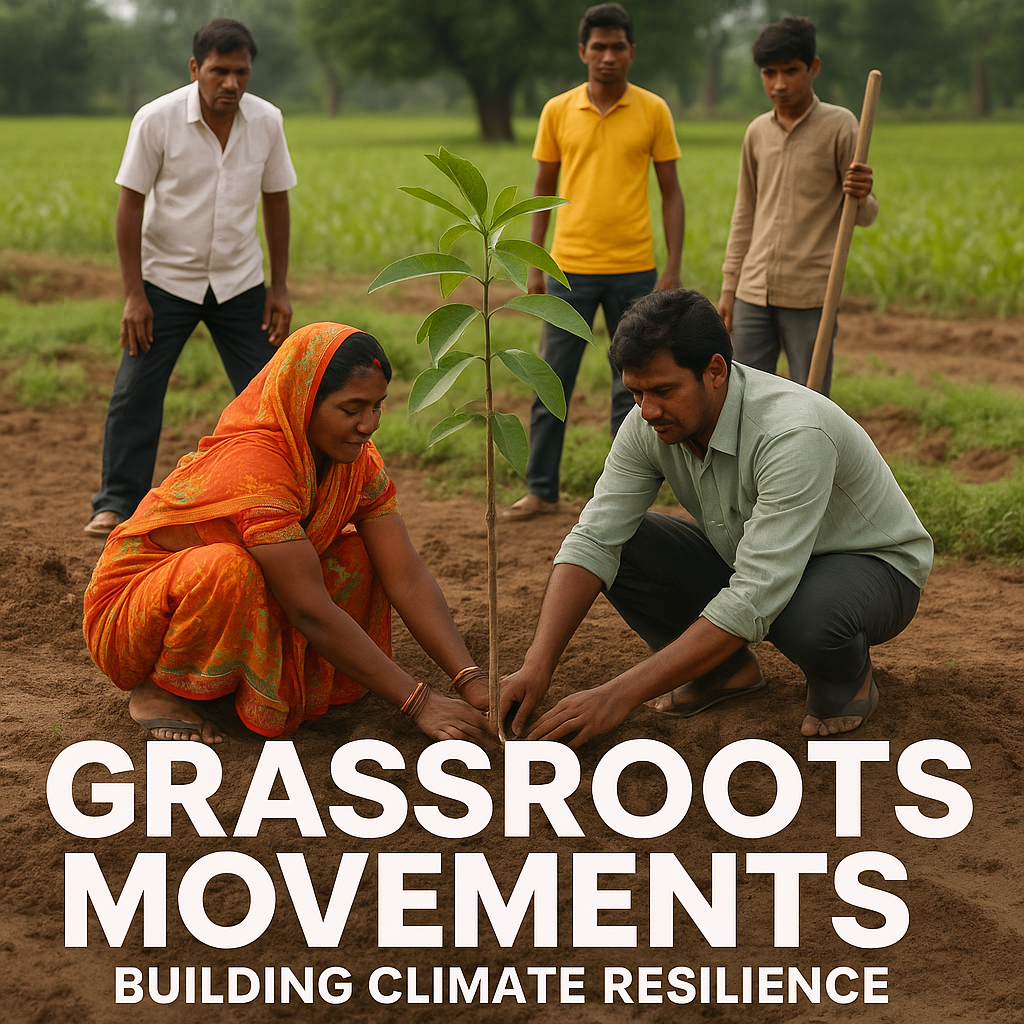
Grassroots Movements: Building Climate Resilience
Grassroots Movements: Building Climate Resilience in India
---
🌱 Introduction: The Power of Community-Led Climate Action
India, with its diverse ecosystems and vast population, faces significant challenges due to climate change. From rising temperatures and erratic rainfall to increasing frequency of extreme weather events, the impacts are profound and widespread. In response, grassroots movements across the country are emerging as powerful agents of change, driving climate resilience through community engagement, traditional knowledge, and innovative practices.
---
🏡 Understanding Grassroots Climate Resilience
What is Grassroots Climate Resilience?
Grassroots climate resilience refers to the capacity of local communities to anticipate, prepare for, respond to, and recover from climate-related shocks and stresses. It involves community-led initiatives that leverage local knowledge, resources, and social networks to build adaptive capacities and reduce vulnerabilities.
Why is it Important in India?
India's vast rural population, dependence on agriculture, and socio-economic disparities make grassroots resilience crucial. Empowering communities to take ownership of climate action ensures sustainability, inclusivity, and effectiveness in addressing localized climate impacts.
---
🌾 Key Components of Grassroots Climate Resilience
1. Community Engagement and Participation
Active involvement of community members in planning and implementing climate actions ensures relevance and sustainability.
2. Integration of Traditional Knowledge
Utilizing indigenous practices and local wisdom enhances the effectiveness of adaptation strategies.
3. Capacity Building and Education
Training and awareness programs equip communities with the skills and knowledge needed for resilience.
4. Access to Resources and Technology
Providing communities with necessary tools, technologies, and financial resources supports the implementation of resilience measures.
5. Policy Support and Institutional Frameworks
Enabling policies and supportive institutions facilitate the scaling and replication of successful grassroots initiatives.
---
🌟 Case Studies: Grassroots Climate Resilience in Action
1. Reviving Indigenous Crops in West Bengal
The Bengal Biodiversity Board has initiated a project to reintroduce near-extinct indigenous rice and cereal varieties into Kolkata's kitchens. These traditional grains, including Kabirajsal, Radhatilak, Khejurchari, Marichsal, Bahurupi, and Tulaipanji, are being cultivated using low-cost organic methods across 13 blocks in 10 districts. This community-driven program engages farmers' groups and self-help collectives, with all proceeds from grain sales going directly to farmers.
2. Empowering Waste Pickers in Pune
Swach, a pro-poor public-private partnership established in Pune in 2005, has revolutionized waste collection by empowering informal waste pickers, mainly women, to become organized, trained climate educators and service providers. Swach’s 3,850 members now provide doorstep waste collection to city residents, diverting over 227 tonnes of waste daily from landfills and reducing greenhouse gas emissions by an estimated 100,000 tonnes of CO₂ annually.
3. Drone-Assisted Afforestation in Madhya Pradesh
In an effort to enhance green cover in Jhabua's hilly tribal regions, a new initiative under the 'Jal Ganga Samvardhan Abhiyan' water conservation campaign was launched, utilizing hexacopter drones to disperse seed balls. The drones dispersed tamarind and custard apple seed balls prepared by local women from the Livelihood Mission. This innovative approach combines technology with community participation to combat climate change.
4. Gender-Inclusive Climate Action Framework
A recent paper published in the Journal of Human Rights and Social Work proposes a gender-transformative climate action framework grounded in feminist theory and climate justice. Authored by Neha Saigal and Saumya Srivastava from Asar Social Impact Advisors, the paper advocates for a shift away from top-down, technocratic climate policies to those that center the experiences and leadership of women, particularly from marginalized communities in the Global South.
5. Art as a Medium for Climate Awareness in Jharkhand
At the Dr. Ramdayal Munda Tribal Welfare Research Institute in Ranchi, a unique art workshop brought together 19 tribal women from across Jharkhand to explore the intersections of climate change and gender through visual storytelling. Organized by Asar and Deshaj Abhikram, the workshop offers a platform for Adivasi women to portray the disproportionate impact of climate change on rural and indigenous communities.
---
🔍 Frequently Asked Questions (FAQs)
Q1: How can individuals contribute to grassroots climate resilience?
A: Individuals can participate in local environmental initiatives, adopt sustainable practices, support community-based organizations, and advocate for policies that promote climate resilience.
Q2: What role do women play in grassroots climate resilience?
A: Women are central to grassroots climate resilience, often leading community initiatives, managing natural resources, and integrating traditional knowledge into adaptation strategies.
Q3: How does traditional knowledge enhance climate resilience?
A: Traditional knowledge offers time-tested practices for resource management, agriculture, and disaster preparedness, which are crucial for effective and culturally appropriate climate adaptation.
Q4: What are some challenges faced by grassroots movements?
A: Challenges include limited access to funding, lack of technical support, policy constraints, and the need for greater recognition and integration into formal climate strategies.
Q5: How can technology support grassroots climate resilience?
A: Technology can aid in information dissemination, early warning systems, resource management, and scaling up successful grassroots initiatives through tools like mobile apps and remote sensing.
---
📈 SEO Optimization: Key Strategies for Environmental Blogs
To maximize reach and impact, environmental blogs should incorporate the following SEO strategies:
Keyword Integration: Utilize relevant keywords such as "climate change in India," "sustainable practices," and "renewable energy solutions" to enhance search engine visibility.
Quality Content: Produce well-researched, informative, and engaging content that addresses current environmental issues and offers practical solutions.
Mobile Optimization: Ensure the blog is mobile-friendly, as a significant portion of users access content via smartphones.
Backlink Building: Collaborate with other reputable websites and blogs to generate backlinks, improving domain authority.
Regular Updates: Keep the content fresh and up-to-date to maintain relevance and encourage repeat visits.
---
📝 Conclusion: The Road Ahead
Grassroots movements are at the forefront of building climate resilience in India. By harnessing community engagement, traditional knowledge, and innovative practices, these initiatives offer sustainable and inclusive solutions to climate challenges. Supporting and scaling such efforts are essential for a resilient and equitable future.
Search
Categories
Tags
Latest Article