

Donate

Donate Tree or Seeds or E-waste
Our Company Address
Green Future Foundation
123 Nature Avenue,
Eco City, Green State 123456,
India
Email: contact@greenfuture.org
Phone: +91 9876543210
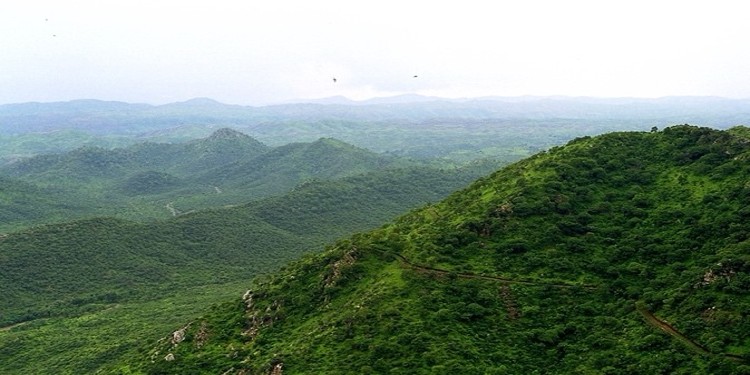
Great Green Wall of Aravalli
The Great Green Wall of Aravalli is an ambitious ecological restoration and climate-resilience project launched by the Indian government, modeled on Africa’s Great Green Wall initiative.
---
🌿 What is the Great Green Wall of Aravalli?
It is a massive afforestation and re-greening campaign stretching along the Aravalli mountain range, aiming to combat:
Desertification from the Thar desert,
Air pollution in Delhi and surrounding regions,
Loss of biodiversity and groundwater depletion.
---
📍 Key Facts:
Feature Details
🌍 Location Aravalli hills across Haryana, Rajasthan, Gujarat, and Delhi
📏 Planned Length 700 km (east to west)
🌱 Target Trees 1.35 billion native species
📆 Timeline 2025–2027 (Phase I started June 2025)
🎯 Goals Carbon sink, biodiversity revival, eco-tourism, water recharge
---
🌳 Components of the Project:
1. Tree Plantation:
Native, drought-resistant, and medicinal plants (e.g., neem, khejri, banyan).
Involvement of local communities, schools, and NGOs under the “Ek Ped Maa Ke Naam” mission.
2. Eco-Development:
Wildlife corridors
Safari parks
Eco-tourism trails
Native plant nurseries
3. Sustainability Infrastructure:
Rainwater harvesting
Rejuvenation of dry ponds and groundwater recharge
Solar-powered community centers
---
📸 Recent Progress (as of July 2025):
Phase I includes large-scale plantations near Gurugram, Alwar, and Jaipur.
Partnerships with corporates and civil society for CSR participation.
Over 20 million saplings already planted in the first month.
---
🔍 Why It Matters:
The Aravallis are over 3 billion years old, yet only 7% forest cover remains in many stretches.
The project will create a green barrier against desertification creeping from western Rajasthan into fertile Indo-Gangetic plains.
Can reduce PM2.5 air pollution and serve as a climate buffer for Delhi-NCR.
---
🧭 Challenges:
Land-use conflicts and encroachments
Protection from illegal mining
Long-term maintenance and survival of plantations
Ensuring community stewardship and scientific monitoring
Here is a FAQ (Frequently Asked Questions) on the Great Green Wall of Aravalli, designed to give a clear, concise overview of the initiative:
---
🌳 Great Green Wall of Aravalli – FAQ
---
❓1. What is the Great Green Wall of Aravalli?
Answer:
It is a large-scale ecological restoration project launched by the Indian government to plant 1.35 billion trees over a 700 km stretch of the Aravalli mountain range. Its goal is to combat desertification, air pollution, water scarcity, and biodiversity loss.
---
❓2. Where is it being implemented?
Answer:
The project spans the Aravalli hills across four states:
Rajasthan
Haryana
Gujarat
Delhi (southern ridge)
---
❓3. What is the timeline?
Answer:
Launch: June 5, 2025 (World Environment Day)
Completion target: 2027 (Phase I)
The project will continue in phases with adaptive monitoring.
---
❓4. What are the goals of the project?
Answer:
Prevent the spread of the Thar desert eastward
Improve air quality in the National Capital Region (NCR)
Restore groundwater and natural habitats
Boost eco-tourism and livelihoods
Strengthen India’s climate resilience
---
❓5. What types of trees are being planted?
Answer:
Mostly native and climate-resilient species, such as:
Neem (Azadirachta indica)
Khejri (Prosopis cineraria)
Banyan (Ficus benghalensis)
Jamun (Syzygium cumini)
Ber (Ziziphus mauritiana)
---
❓6. How does this help Delhi’s pollution problem?
Answer:
The Aravallis act as a natural barrier to dust storms and particulate matter from western India. Re-greening will:
Trap PM2.5 particles
Lower summer temperatures
Reduce dust flow into Delhi-NCR
---
❓7. Who is responsible for the project?
Answer:
Coordinated by the Ministry of Environment, Forest and Climate Change (MoEFCC)
In partnership with state forest departments, local communities, and private CSR funding
---
❓8. How is it being funded?
Answer:
Through a combination of:
Government budget (CAMPA funds)
CSR contributions
NGO partnerships
Community involvement (via campaigns like "Ek Ped Maa Ke Naam")
---
❓9. What are the challenges?
Answer:
Land encroachment and illegal mining
Survival rate of saplings due to poor rainfall or grazing
Ensuring long-term care and protection
Preventing greenwashing and ensuring scientific monitoring
---
❓10. How can citizens get involved?
Answer:
Join local plantation drives
Sponsor saplings via government/NGO platforms
Volunteer for awareness and monitoring
Advocate for Aravalli protection in urban planning
Search
Categories
Tags
Latest Article